Cute Slow Loris Swimming Embroidery Design Review
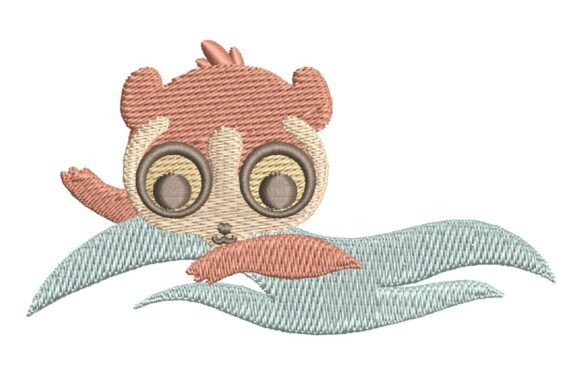
As an experienced embroidery designer preparing for a busy weekend at the local craft fair, I spend a lot of time scrutinizing my digital library before committing thread to fabric. The goal is always to find that perfect craft fair product that stops customers in their tracks. Recently, I pulled up the Cute Slow Loris Swimming Embroidery Design to evaluate its potential for my booth. This adorable machine embroidery design features a stylized slow loris, depicted playfully swimming with its characteristic large eyes. The loris's fur is rendered in textured light brown and beige, with dark accents that suggest depth without overwhelming the stitch count. For sellers targeting the Vacation niche or those looking for whimsical Embroidery additions to their summer collections, this file offers a unique blend of cuteness and technical practicality.
First Impressions and Aesthetic Appeal
The first thing that strikes me about the Cute Slow Loris Swimming Embroidery Design is its undeniable charm. It does not scream "rustic farmhouse" or "elegant minimalism"; instead, it lands squarely in the "soft and playful" category. The large eyes of the slow loris are the focal point, instantly creating an emotional connection with the viewer. In a crowded market environment, items that evoke an "aww" reaction tend to perform exceptionally well. The color palette of light brown and beige is versatile, allowing it to sit comfortably on both neutral and vibrant backgrounds. This makes it an ideal candidate for a wide range of handmade products. The design feels modern yet timeless, avoiding trends that might date quickly, which is crucial for building a sustainable inventory for your small shop product line.
Product Application and Versatility
When setting up my display table, versatility is key. I need designs that can translate across various substrates without losing their impact. Here is how I see the Cute Slow Loris Swimming Embroidery Design performing on specific items:
- Tote Bags and Market Bags: This is likely the strongest contender for this design. A tote bag design needs to be visible from a distance, and the swimming motif works perfectly on the flat canvas of a tote. It appeals to eco-conscious shoppers looking for unique accessories.
- Aprons and Tea Towels: For the kitchen section of my booth, apron embroidery and tea towel embroidery are staples. The playful nature of a swimming animal fits well here, suggesting a fun, relaxed approach to cooking and cleaning. However, one must be mindful of the fabric texture of waffle weave towels, which can sometimes distort fine details.
- Embroidered Patches: Creating an embroidered patch allows customers to buy the design as an add-on for jackets or backpacks. The distinct outline of the loris should hold up well when cut and merrowed, provided the stitch density is sufficient to prevent fraying.
- Caps and Pouches: While possible, curved surfaces like caps require careful hooping. The swimming orientation might look odd if not centered perfectly on the crown. Small pouches are a great low-cost entry point for buyers who want a taste of the brand.
Production Practicality for Batch Manufacturing
For any Etsy seller or boutique maker, production speed and consistency are vital. The Cute Slow Loris Swimming Embroidery Design appears to be optimized for efficiency. The use of textured fills rather than solid satin blocks suggests a design that covers ground quickly while still looking premium. When evaluating a digital embroidery file for batch production, I look for minimal thread changes and logical jump sequences. This design seems to follow a logical flow, moving from the body to the facial features.
Photography is another critical factor. Does the design photograph well for online listings? Yes, the contrast between the light fur and the dark eyes ensures that the subject pops in photos, even on smaller screens. Creating a printable mockup or using design assets to showcase this on various backgrounds will help visualize the finished product before you even stitch the first sample. The visual appeal directly influences customer attention and perceived value, making it a strong asset for brand consistency.
Technical Considerations and Careful Use Notes
Despite its strengths, no design is without its challenges. As a professional, I must highlight several areas where caution is required to ensure high-quality commercial embroidery results:
- Dense Stitch Areas: Check the density of the eye details. If the stitches are too packed on a lightweight fabric, it can cause puckering or needle breakage.
- Tiny Details: The expression of the loris relies on small details. On very thick fabrics or textured towels, these tiny elements might get lost or merge together.
- Thread Contrast: Ensure your thread colors provide enough contrast against the base fabric. On dark fabric, the light brown and beige fur will shine, but you may need to adjust the underlay or add a backing to prevent the fabric color from showing through.
- Curved Surfaces: When applying this to caps, the curved surface can distort the swimming motion. Test extensively to ensure the loris doesn't look like it is sinking due to perspective distortion.
- Sizing Clarity: Designs often lose clarity when scaled down too small. If you plan to use this as a small accent on a pocket, verify that the "swimming" context remains clear and doesn't just look like a brown blob.
Designer Recommendations for Success
Before adding the Cute Slow Loris Swimming Embroidery Design to your permanent rotation, I strongly advise following a rigorous testing protocol. First, test the design on scrap fabric that matches your intended sale items exactly. Do not assume a test on muslin will translate perfectly to canvas or terry cloth. Second, check thread contrast under the actual lighting conditions of your booth or photo studio. Third, review spacing between elements to ensure stability during washing.
You must also confirm hoop size requirements. While not explicitly stated in the file description, knowing the minimum hoop size prevents last-minute re-hooping frustrations. Inspect the stitch density closely; if it feels too heavy for your fabric, consider reducing the pull compensation in your software. Always use the right stabilizer; for a swimming design on a tote bag, a cut-away stabilizer might offer better long-term support than tear-away, especially if the bag will carry heavy groceries.
Furthermore, create at least one real printable mockup or physical sample to display prominently. Customers love touching and seeing the quality of the stitches up close. Compare different fabric colors to see which combination yields the highest perceived value. Finally, and perhaps most importantly, confirm commercial licensing before selling finished products. Ensure your license covers the volume of craft fair sales and online distribution you plan to undertake. If the file format or specific stitch count is not provided in the initial description, reach out to the creator or check the documentation thoroughly before production begins.
In conclusion, the Cute Slow Loris Swimming Embroidery Design is a promising asset for any creative entrepreneur. Its ability to convey emotion, combined with a versatile color scheme, makes it a standout choice for Vacation themed goods and everyday Embroidery projects. With careful attention to technical details and strategic product placement, this design has the potential to become a bestseller in your handmade shop.